Compensatory evolution of proteins under episodes of GC-biased gene conversion
SemIDEEV
13/03/2026
12:00:00
Marie Riffis, GQE-Le Moulon
IDEEV - Salle Rosalind Franklin
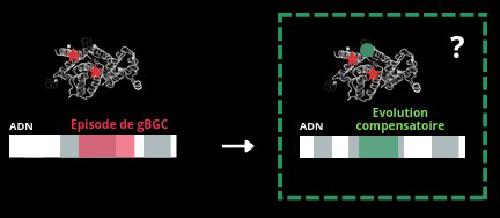
GC-biased gene conversion (gBGC) is a DNA repair mechanism biased towards GC associated with meiotic recombination, which acts as a segregation distorter by favouring the transmission of GC alleles. gBGC has been the subject of numerous studies, which have demonstrated its presence in many eukaryotes and its effect on variations in GC content across genomes. In particular, gBGC can be deleterious by promoting the fixation of mutations towards GC independently of their fitness effect. In many mammals, gBGC is transient because recombination hotspots are unstable over time. However, an aspect that has hardly been studied is the response of proteins to these transient deleterious effects : does compensatory evolution of proteins occur following gBGC episodes ? I will present the results of my thesis (carried out at ISEM, Montpellier), which explored this question empirically through a phylogenetic approach applied to five mammalian groups, and also theoretically through simulations using Fisher’s Geometrical Model.