Dynamics of insect pest communities and biological control under a changing climate
J. Sokame
SemIDEEV
12/06/2026
12:00:00
Joel SOKAME - ICIPE - Nairobi - Kenya
IDEEV - Salle Rosalind Franklin
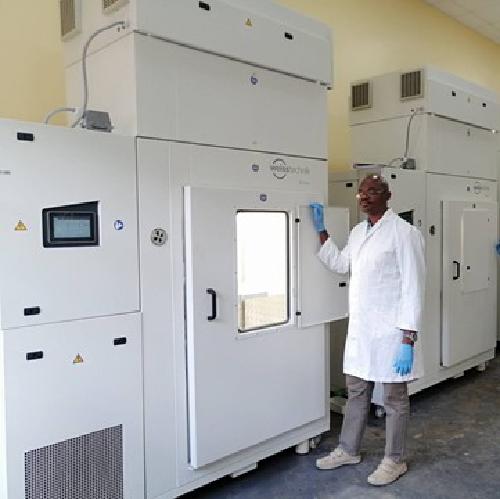
Climate change is profoundly altering the interactions among crops, insect pests, and their natural enemies, with major implications for agricultural sustainability and food security. My research combines experimental ecology, chemical ecology, and predictive modelling to understand how rising temperature and atmospheric CO₂ reshape insect community dynamics and the effectiveness of biological control. Using controlled phytotron experiments, behavioural assays, and spatial modelling, I investigate the mechanisms through which climate change affects plant–herbivore–parasitoid interactions. My work has shown that climate change can modify host plant quality, alter volatile-mediated communication, and shift the performance and geographical suitability of key parasitoids used in biological control. These insights have been applied to several systems of major agricultural importance, including maize stemborers, fall armyworm, and the invasive tomato leaf miner Phthorimaea absoluta (Meyrick) (Lepidoptera: Gelechiidae) and its parasitoid Dolichogenidea gelechiidivoris (Marsh) (Hymenoptera: Braconidae). By integrating empirical response functions with climate projections, I develop decision-support tools that identify ecological refugia, forecast pest and natural enemy distributions, and assess future biological control potential under contrasting climate scenarios. The overall objective is to advance climate-informed biological control strategies and strengthen early warning systems for sustainable pest management in Africa and beyond. This seminar will present key findings from these studies and discuss ongoing efforts to develop climate-smart biological control innovations for invasive pests, with particular emphasis on their relevance for global food security under climate change.