Nature Information May 2026 : A month of births
26/05/2026

Nature Information, IDEEV’s monthly nature news, written by Maxime Hache, naturalist and scientific mediator at Ecologie, Société, Evolution .
The month of May is one of the richest in biodiversity and it is also the breeding season for many species. Thus, it is possible to observe at the moment animals taking care of their young and plants in full bloom around IDEEV.
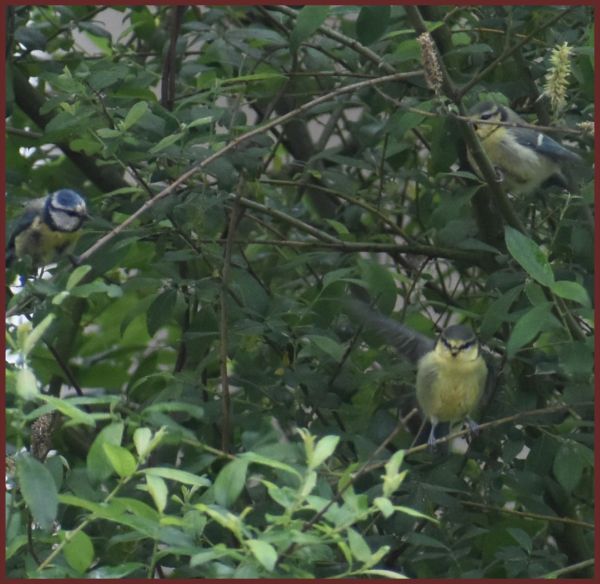
Eurasian blue tit (Cyanistes caeruleus) Many birds have come out of their nests but remain close to their parents to still benefit from their care while learning to eat by themselves. The erasian blue tits, great tits, and european stonechats chicks look very similar to mature adults but are much less colorful. From morning to evening, we regularly ear them calling for their parents to receive food.
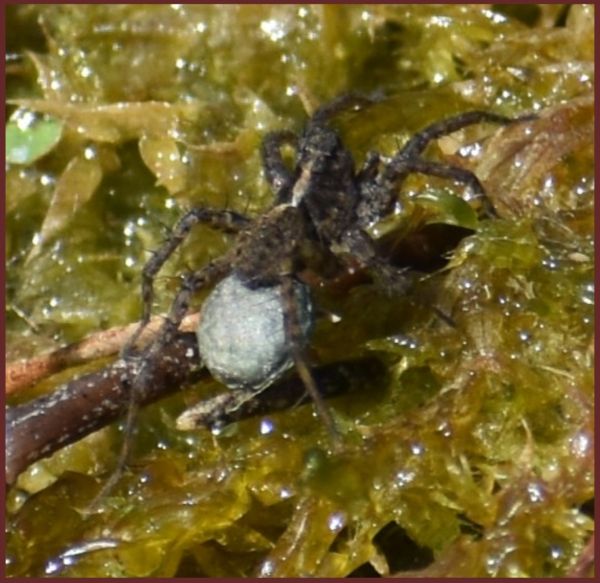
Wolf spider (Pardosa lugubris) Very few spiders provide parental care for their offspring. The different species of wolf spiders are part of them, they carry their cocoon at the end of their spinnerets until the birth of the young, who will then climb onto their mother’s back, still attached by a silk thread. The mother will feed them until their first moult, from which they can hunt.
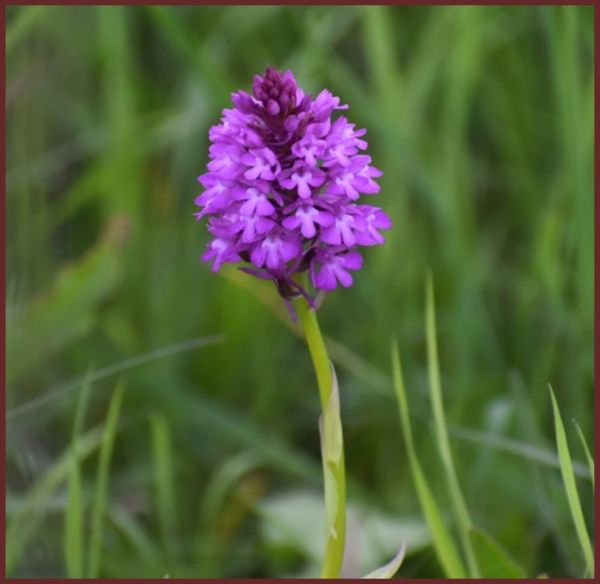
Pyramidal orchid (Anacamptis pyramidalis) Wild orchids are rare plants due to their particular biology, they generally grow in small numbers at a distance from the mother plant. This is why many species benefit from protection at the european, french or regional level. The pyramidal orchid is relatively common, but it remains present in small numbers on the IDEEV site. This species is recognized by its pyramidal inflorescence with trilobed flowers.
Froghopper (Cercopis intermedia)
This froghopper with red knees belongs to the suborder of homopterans, where cicadas and leafhoppers are found. Like many hemipterans, it is a sap-sucking insect. The juvenile protects itself with a foamy substance that is often observed on the stem of plants. The position of mating is particular in this family; individuals stand at 45° next to each other. This species is recognized by its fine red patterns in the shape of lunules and also by its legs spotted with red on the knee.

Note: nature photographs may be more or less clear due to the fact that some shy birds move around a lot, depending on the weather, lack of light… Photos were taken nearby IDEEV
Nature Information January-February 2026
Photo copyright : Maxime Hache - ESE