Nature Information June 2026 : Last visits before the heat
29/06/2026

Nature Information, IDEEV’s monthly nature news, written by Maxime Hache, naturalist and scientific mediator at Ecologie, Société, Evolution . This is the last issue of Nature infomration, Maxime is leaving fo rnew horizons.
Before the hot weather significantly reduced the number of species visiting the pools behind IDEEV, the month of June turned out to be just as abundant as May in terms of plants, insects and birds.
Common centaury (Centaurium erythraea) While many flowers end up blooming among the dry herbs, the common centaury is just beginning to unfold its beautiful pink flowers. It is thanks to its umbel flowers and its long, oval leaves that we recognize it. Growing in wet and acidic meadows, it is a very important source of nectar for small insects. It is also tested for the use of many of its active ingredients in pharmacy.

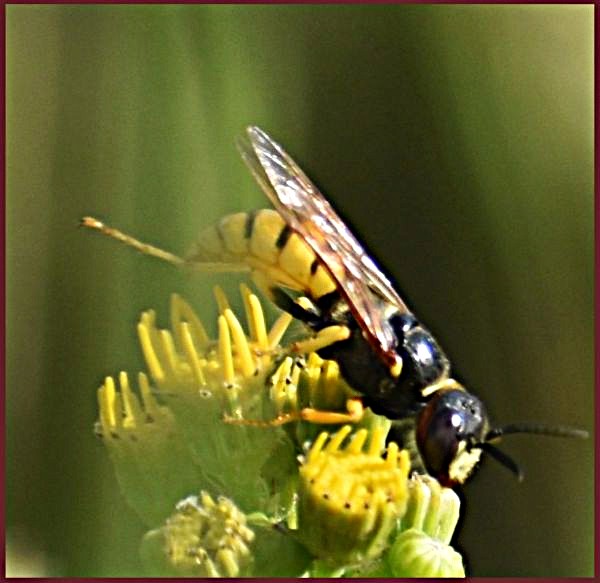
European beewolf (Philanthus triangulum) The european beewolf is a wasp, as its name indicates, it is a bee hunter, mainly of the very docile domestic bee. It paralyzes its prey before taking it to its nest, made up of a gallery in the ground, so that its larvae feed on it. A beewolf nest can contain between 3 and 20 bees, often more in cells containing females. Despite its quasi-specialization on the honeybee, beewolves remain rare and the damage to the hives is therefore anecdotal.
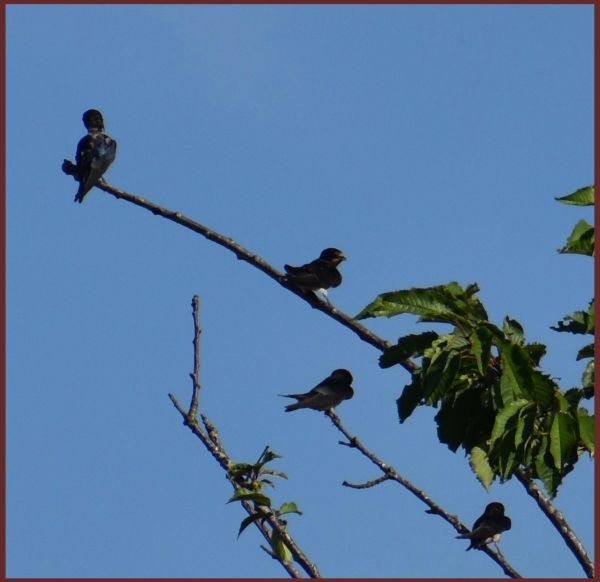
Barn Swallow (Hirundo rustica) The barn swallow is a well-known summer migratory bird. It distinguishes itself from other swallows by its red spot at the front of the head, which is clearly visible in flight. Unlike the house martin, which builds a whole nest, the barn swallow’s nest is half-cup shaped. Both species are dependent on human constructions for their nests made from saliva and mud, hence their sometimes significant presence in humid environments. Swallows are formidable insectivores that capture their prey as they fly high in the sky. When the weather conditions worsen, the insects come back down and the swallows with them, that’s why we say it will rain when the swallows fly low.
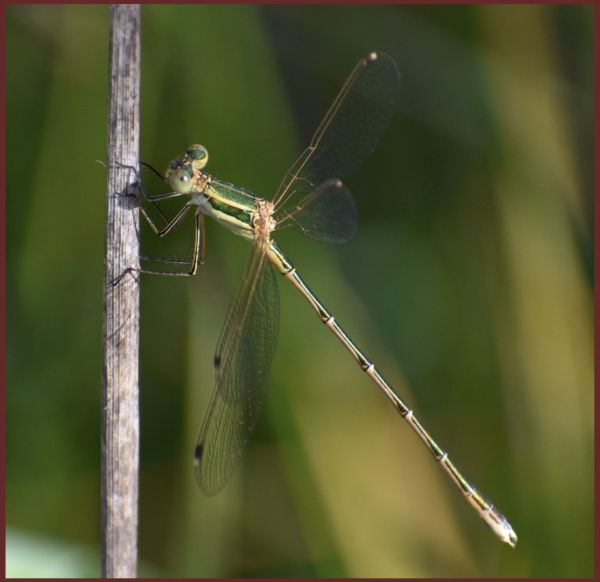
Migrant spreadwing (Lestes barbarus) Spreadwings are recognized by their slim waist, their often metallic colors and the way they spread their wings at rest at 45°. Several species of green spreadwings fly over the pools behind IDEEV and they differ mainly by the color of the spot at the tip of their wings. The migrant spreadwing’s spot is bicolored black and white, it also has the back of the eyes bicolored : green and yellow as well as the veins at the base of the wings orange. This species likes temporary ponds to lay its eggs, which will give aquatic larvae. Sometimes eggs are laid even before the presence of water and adults are able to disperse far away to find food if the environment becomes depleted in prey.
Note: nature photographs may be more or less clear due to the fact that some shy birds move around a lot, depending on the weather, lack of light… Photos were taken nearby IDEEV
Nature Information January-February 2026
Photo copyright : Maxime Hache - ESE